


 Cart
Cart
 sales@molnova.com


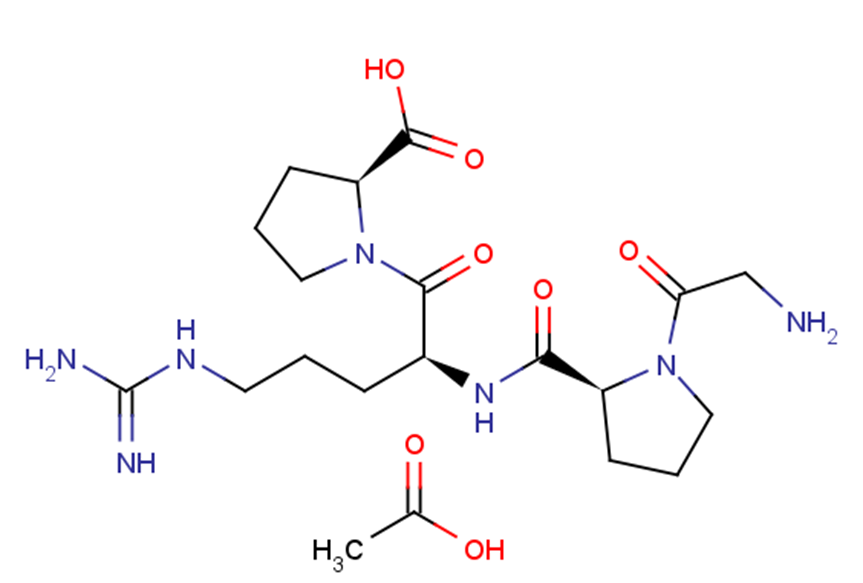
GPRP acetate
CAS No. 157009-81-9
GPRP acetate( —— )
Catalog No. M29759 CAS No. 157009-81-9
GPRP acetate is fibrinogen-related peptides, which inhibit the interaction of fibrinogen with the platelet membrane glycoprotein IIbIIIa complex (GPIIbIIIa).
Purity : >98% (HPLC)
 COA
Datasheet
HNMR
HPLC
MSDS
Handing Instructions
COA
Datasheet
HNMR
HPLC
MSDS
Handing Instructions
| Size | Price / USD | Stock | Quantity |
| 2MG | 41 | In Stock |


|
| 5MG | 65 | In Stock |
|
| 10MG | 102 | In Stock |
|
| 25MG | 205 | In Stock |
|
| 50MG | 335 | In Stock |
|
| 100MG | 537 | In Stock |
|
| 200MG | Get Quote | In Stock |
|
| 500MG | Get Quote | In Stock |
|
Biological Information
-
Product NameGPRP acetate
-
NoteResearch use only, not for human use.
-
Brief DescriptionGPRP acetate is fibrinogen-related peptides, which inhibit the interaction of fibrinogen with the platelet membrane glycoprotein IIbIIIa complex (GPIIbIIIa).
-
DescriptionGPRP acetate is fibrinogen-related peptides, which inhibit the interaction of fibrinogen with the platelet membrane glycoprotein IIbIIIa complex (GPIIbIIIa).
-
In Vitro——
-
In Vivo——
-
Synonyms——
-
PathwayOthers
-
TargetOther Targets
-
Recptor——
-
Research Area——
-
Indication——
Chemical Information
-
CAS Number157009-81-9
-
Formula Weight485.53
-
Molecular FormulaC20H35N7O7
-
Purity>98% (HPLC)
-
SolubilityIn Vitro:?H2O : 125 mg/mL (268.93 mM)
-
SMILES——
-
Chemical Name——
Shipping & Storage Information
-
Storage(-20℃)
-
ShippingWith Ice Pack
-
Stability≥ 2 years
Reference
molnova catalog



related products
-
TAT peptide
TAT peptide corresponds to the polycationic aa49-57 region of TAT protein. TAT peptide is a cell-penetrating peptide (CPP) used to cargo larger molecules through the lipophilic barrier of the cellular membranes to deliver them inside the cells with intact biological activity.
-
Carasinol B
Carasinol B is a natural product from Carex humilis Leyss.
-
Amifampridine
Amifampridine works by blocking potassium channel efflux in nerve terminals so that action potential duration is increased. Ca2+ channels can then be open for a longer time and allow greater acetylcholine release to stimulate muscle at the end plate.
